


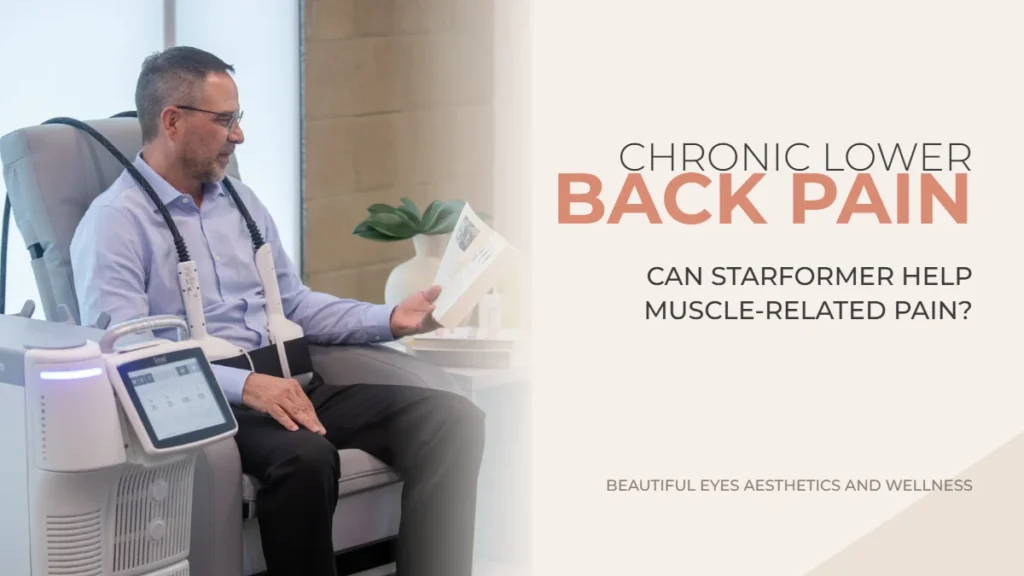
For a lot of people, back pain eventually just becomes background noise. It’s not bad enough to stop you from getting through your day, but it’s always there, humming in the background of everything you do.
Sitting too long makes it worse. So does standing too long. Maybe you’ve tried stretching, heat, over-the-counter medication, or just waiting it out and hoping it fades on its own.
If that sounds familiar, you’re far from alone. In 2019, 39% of U.S. adults reported back pain in the previous three months, according to the CDC. But the cause behind it varies widely from person to person. For people whose discomfort has a muscular component, non-invasive options are worth understanding as part of a broader care plan.
What Is Chronic Lower Back Pain?
Chronic lower back pain generally means pain that sticks around for roughly 12 weeks or longer. That’s the key distinction from a minor strain, which typically improves within days or a couple of weeks. Chronic pain, by contrast, can linger, return in waves, or fluctuate unpredictably over time.
It also rarely has just one cause. Muscles may play a role, but joints, discs, nerves, ligaments, bones, and inflammatory conditions can all contribute too. That’s exactly why figuring out what’s actually driving persistent pain matters more than jumping straight to a treatment.
What Does Chronic Back Pain Actually Feel Like?
No two people describe it quite the same way. Symptoms may:
- Feel dull and achy, or sharp and burning
- Stay localized, or spread into nearby areas
- Worsen after long stretches of sitting or standing
- Shift or ease with movement and position changes
- Come with stiffness or reduced mobility
Some people notice their pain spikes after hours at a desk or a long shift on their feet. Others find it changes with activity, posture, or how they’re moving that day.
Because symptoms overlap so much between different underlying conditions, it’s a mistake to assume all persistent back pain traces back to weak or overworked muscles. Sometimes it does. Often, something else is involved too.
What Actually Causes Chronic Lower Back Pain?
Your lower back depends on a complex system. Muscles, joints, discs, ligaments, and nerves, all working in coordination. When persistent pain shows up, it’s rarely from one single cause.
Depending on the individual, contributing factors can include:
- Muscle strain or muscular dysfunction
- Reduced core or back muscle conditioning
- Repetitive movement or lifting
- Prolonged sitting
- Changes in posture or movement patterns
- Joint or disc-related conditions
- Nerve irritation
- Previous injuries
- Age-related changes
Muscle weakness can absolutely contribute to some cases of back discomfort. But it shouldn’t be automatically assumed to be the cause. A proper evaluation is what actually determines whether a muscle-focused approach makes sense for you.
When Does Back Pain Need Medical Evaluation First?
Some back pain needs a doctor’s evaluation before anything else, muscle-focused or otherwise.
Seek medical attention for new, severe, worsening, or unexplained back pain, especially alongside:
- Significant weakness
- Loss of bowel or bladder control
- Numbness in the groin or inner thighs
- Fever or signs of infection
- Unexplained weight loss
- Significant trauma
- Progressive neurological symptoms
This article covers general information about muscle-related back pain and non-invasive muscle stimulation. It’s not meant to diagnose the cause of your back pain or replace a medical evaluation.
How Does Fotona StarFormer Actually Work?
Fotona StarFormer uses HITS, or High-Intensity Tesla Stimulation, to stimulate targeted muscles through magnetic energy, not electricity, not heat, and not physical manipulation.
For core and back support, StarFormer uses the CoreRestore protocol. It triggers repeated, involuntary contractions in the lower back, abdomen, and pelvic muscles, well beyond what voluntary movement alone typically achieves. There’s no surgery, no needles, and no incisions involved.
For appropriately evaluated patients with muscle-related concerns, this kind of targeted stimulation may be discussed as part of a broader approach to muscle conditioning and support. If you think it may fit your situation, schedule a consultation to discuss whether StarFormer belongs in your care plan. It’s worth being direct: StarFormer isn’t a substitute for medical diagnosis, physical therapy, exercise, or other treatments when those are what’s recommended for your situation.
The Role Muscle Stimulation Plays in Back Support
Your core and lower back muscles carry real weight, literally, supporting movement and spinal stability all day, every day. When conditioning is reduced, or certain muscle groups are hard to activate on their own, a provider may build an individualized plan that includes exercise, rehabilitation, physical therapy, or other strategies.
StarFormer offers targeted magnetic muscle stimulation and may be considered a complementary piece of that plan for the right patients. But muscle stimulation isn’t a fit for every cause of back pain. Disc-related conditions, nerve pain, fractures, infections, and inflammatory conditions often need a completely different form of evaluation and treatment.
StarFormer vs. Other Common Approaches
| StarFormer | Physical Therapy | TENS Unit | |
| How it works | Magnetic pulses trigger involuntary muscle contractions | Guided exercise, movement training, manual techniques | Electrical stimulation for sensory relief |
| Involves active effort? | No, passive | Yes, active participation required | No |
| Primary goal | Muscle conditioning and stimulation | Rehabilitation and functional movement | Temporary sensory pain relief |
| Needles or surgery? | No | No | No |
This isn’t an either/or comparison. For many patients, these approaches work best combined, not chosen instead of each other. Patients researching this space often also ask how StarFormer vs. EMSculpt compare, since both are magnetic muscle stimulation devices but use different underlying technology.
What Happens During a StarFormer Session?
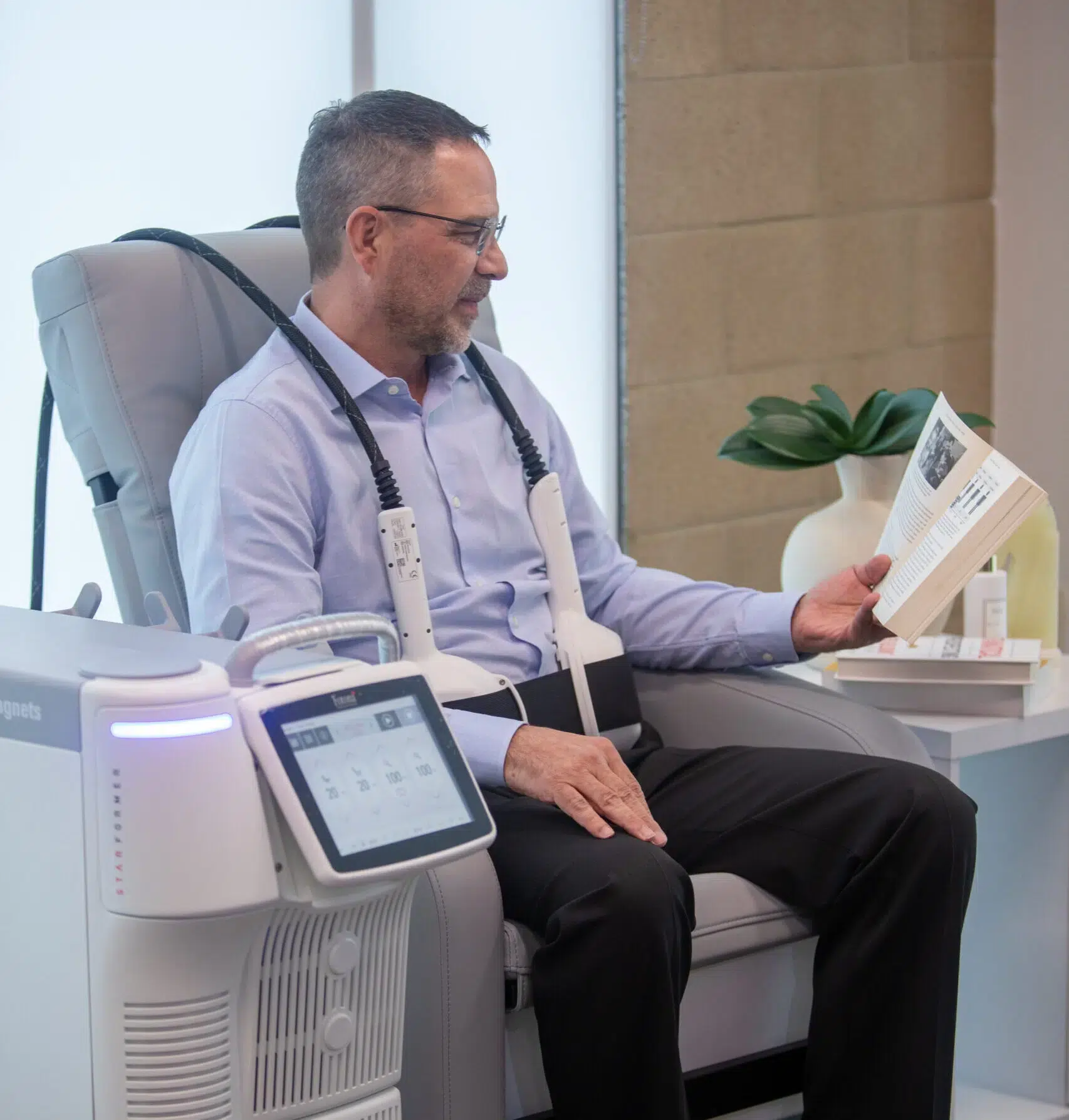
A StarFormer session is entirely non-invasive. No needles, no surgery, no downtime to plan around.
For CoreRestore, you sit fully clothed in the treatment chair, and an additional applicator is placed on your abdomen. Sessions last about 20 to 30 minutes. Expect repeated muscle contractions or a rhythmic pulsing sensation, not pain in the traditional sense. According to Fotona, many patients notice significant changes by around 10 sessions.
Your specific experience varies by treatment area, intensity, and overall plan. Your provider will walk you through exactly what to expect beforehand, and confirm whether the technology fits your health history and goals.
Potential Benefits of StarFormer for Muscle-Related Back Pain
Targeted Muscle Stimulation
StarFormer is built to stimulate specific muscle groups through repeated involuntary contractions, giving appropriately selected patients another option for focusing on core and back conditioning.
A Non-Invasive Option
No surgery, no incisions, no needles. For anyone exploring non-invasive pain management or muscle-focused treatment after proper evaluation, that alone is often the deciding factor.
Passive Muscle Activation
You stay comfortably positioned throughout treatment. There’s no active exercise required during the session itself. That said, passive stimulation shouldn’t automatically replace an appropriate exercise or rehabilitation program. It’s a complement, not a shortcut around one.
A Piece of a Broader Care Plan
For some patients, muscle stimulation fits naturally alongside provider-guided exercise, physical therapy, mobility work, or lifestyle adjustments. What combination makes sense depends entirely on what’s actually causing your symptoms.
Who Might Be a Good Candidate for StarFormer?
StarFormer is worth discussing if a healthcare professional or qualified provider has identified muscular conditioning as relevant to your concerns.
You may want to ask about it if you:
- Have persistent back discomfort with a suspected or confirmed muscular component
- Are interested in targeted core or back muscle stimulation
- Want to explore a non-invasive treatment option
- Are looking to add another piece to a broader conditioning or rehabilitation plan
- Are in generally good health and have already been appropriately evaluated for your symptoms
A consultation is the only real way to determine whether this treatment fits your individual situation.
Who Might Not Be a Good Candidate?
Magnetic stimulation treatments aren’t right for everyone. Certain medical conditions, implanted electronic devices, metal implants, pregnancy, seizure history, and other health factors can affect eligibility.
Because contraindications vary by device, treatment area, and individual history, your provider needs to review your full health information before treatment begins. A provider at Beautiful Eyes Aesthetics and Wellness can walk through your history and confirm whether StarFormer is appropriate for you.
Why Getting the Right Diagnosis Matters First
Back pain has too many possible causes to treat blindly. Before starting any muscle-focused treatment, it matters whether your symptoms trace back to muscles, joints, discs, nerves, or something else entirely.
Depending on your symptoms, a healthcare professional may recommend a history review, physical exam, imaging, or a referral to a specialist. Once the likely cause is actually understood, it becomes much easier to know whether muscle stimulation fits your care plan, or whether it doesn’t.
Supporting Back Health Beyond the Treatment Room
Professional treatment is only one piece of long-term back health. Depending on your condition and your provider’s recommendations, supportive strategies can include:
- Regular movement throughout the day
- Provider-recommended stretching or mobility work
- Appropriate strengthening exercises
- Avoiding long stretches in the same position
- Paying attention to lifting and movement mechanics
- Maintaining a healthy activity level overall
- Following your specific medical or rehabilitation guidance
What’s appropriate for one type of back pain may not be appropriate for another, which is exactly why “the best stretch for back pain” rarely has one universal answer.
Chronic Back Pain Therapy and Non-Invasive Pain Management in Greenfield, MA
Chronic lower back pain doesn’t always call for surgery, but it does call for understanding what’s driving it.
For patients with an evaluated muscular component to their discomfort, Fotona StarFormer may be discussed as a complementary option for targeted muscle stimulation and conditioning. At Beautiful Eyes Aesthetics and Wellness, patients can also explore other restorative treatment options alongside it.
StarFormer isn’t a replacement for medical care, and it’s not the right fit for every kind of back pain. A consultation is what actually determines whether it fits your goals, or whether additional evaluation or rehabilitation should come first.
Is StarFormer Right for Your Back Pain?
If you’re dealing with ongoing back pain, the first question shouldn’t be “what treatment should I try?”
It should be “what’s actually causing my pain?”
Once your symptoms have been properly evaluated, you can have a real conversation about whether muscle-focused approaches make sense for your specific situation.
For anyone interested in chronic back pain therapy and non-invasive pain management in Greenfield and the surrounding area, a consultation at Beautiful Eyes Aesthetics and Wellness is the place to start that conversation.
Book a free consultation to talk through your goals, health history, and options.
FAQs
Is StarFormer the Same as Physical Therapy?
No. Physical therapy is active rehabilitation guided by a licensed therapist, often combining exercise and hands-on techniques. StarFormer is passive magnetic muscle stimulation, and it doesn’t replace PT when PT is clinically recommended.
Can StarFormer Permanently Fix Chronic Back Pain?
Chronic back pain has many possible causes, and results vary by person. The underlying cause of your symptoms should always guide treatment, not the other way around.
Is StarFormer Safe for a Herniated Disc or Nerve Pain?
It depends on your diagnosis. Disc and nerve-related pain often need different evaluation and treatment entirely. Talk to a healthcare professional first if you have a herniated disc, sciatica, numbness, or weakness.
Do I Need a Doctor’s Referral to Discuss StarFormer?
No, you can book a consultation directly. If your pain is new, severe, or unexplained, get a medical assessment first.
Where Can I Learn More About StarFormer Back Pain Treatment in Greenfield, MA?
Schedule a consultation at Beautiful Eyes Aesthetics and Wellness in Greenfield, MA. Your provider will review your history and goals to see if StarFormer is a fit.