


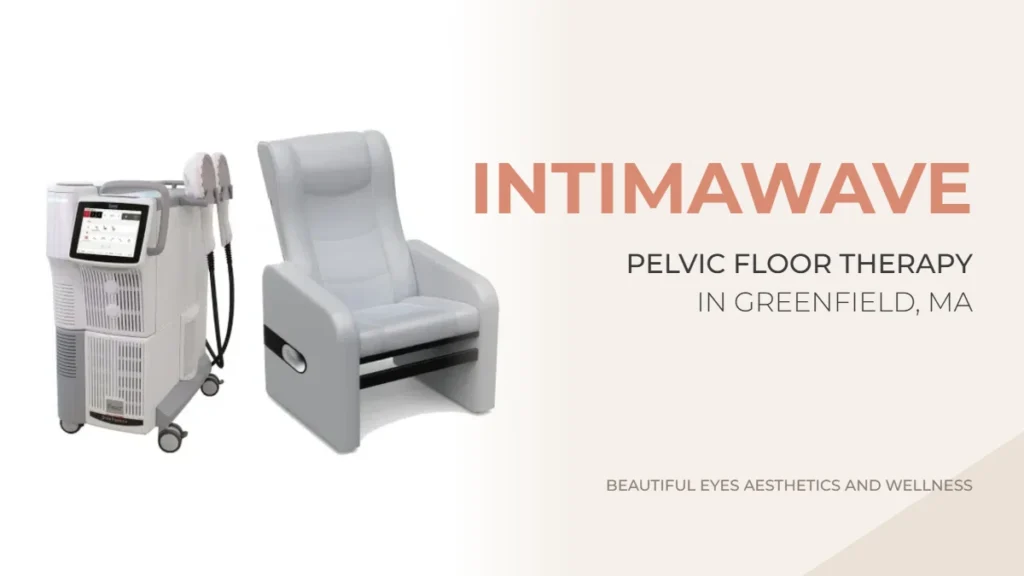
Pelvic floor weakness is more common than most people realize. It can affect daily life in ways that often go unspoken. Beautiful Eyes Aesthetics and Wellness is introducing IntimaWave, a non-invasive approach to pelvic floor therapy. It requires no needles or surgery. You simply sit down, stay fully clothed, and allow the treatment to stimulate the pelvic floor muscles.
Are you dealing with urinary leakage, pelvic weakness, or changes after childbirth or pelvic surgery? IntimaWave offers another option to discuss with a qualified provider.
What Is IntimaWave Pelvic Floor Therapy?
IntimaWave is a pelvic floor strengthening treatment that uses High-Intensity Tesla Magnetic Stimulation (HITS) on the Fotona StarFormer chair to stimulate the pelvic floor muscles. Magnetic pulses are delivered through the treatment chair to trigger repeated muscle contractions.
There is no internal probe or exam involved in the treatment. You remain seated and fully clothed throughout the session while the magnetic stimulation works to activate the pelvic floor muscles.
As with any treatment, whether IntimaWave is appropriate depends on your individual health history, symptoms, and treatment goals.
Who May Benefit From Pelvic Floor Strengthening?
Many people quietly manage pelvic floor symptoms for years before seeking help. Some assume these concerns are simply part of aging. Others may feel uncomfortable discussing them.
IntimaWave is a private, non-invasive option worth discussing with a provider if you have symptoms of pelvic floor weakness.
| You May Benefit If You Notice | What This Can Look Like |
| Pressure or heaviness in the pelvis | A persistent, low sensation that does not go away |
| Discomfort during daily movement | Activities like standing, walking, or exercise feel harder or uncomfortable |
| Recovery after childbirth | Pelvic floor weakness following normal or cesarean delivery |
| Recovery after pelvic surgery | Muscles that need rebuilding strength and support post-procedure |
These concerns are common. About 1 in 3 women experience urinary leakage in the first year after giving birth, according to a 2021 meta-analysis. If you’re recovering from childbirth, our guide to StarFormer for postpartum recovery covers core and pelvic floor rebuilding in more detail.
Urinary Incontinence Treatment With IntimaWave
Urinary incontinence is one of the reasons people seek out pelvic floor strengthening and bladder control treatment.
Urinary incontinence refers to the unintentional leakage of urine. It can happen with activities such as coughing, sneezing, laughing, or exercising, or it can involve a sudden urge to urinate that is difficult to control.
Because the pelvic floor muscles contribute to bladder control, strengthening and rehabilitating these muscles may be part of a broader approach to managing certain types of urinary incontinence.
IntimaWave is designed to stimulate the pelvic floor muscles and support muscle function as part of a treatment plan tailored to the individual.
For Women
Women may consider IntimaWave for concerns associated with pelvic floor weakness, including stress incontinence, which can involve leakage during coughing, sneezing, laughing, or exercise.
It may also be considered for people experiencing urinary urgency, pelvic pressure or heaviness, general pelvic discomfort, or changes in pelvic floor function following childbirth.
Pregnancy, childbirth, perimenopause, and menopause can all be associated with changes in pelvic floor function and bladder control. IntimaWave focuses on stimulating the pelvic floor muscles. Your provider can help determine whether it suits your symptoms.
For Men
Pelvic floor concerns are not limited to women. Men may also experience pelvic floor weakness or urinary incontinence, including symptoms following prostate surgery or other pelvic procedures.
Some men may also experience pelvic floor dysfunction alongside chronic lower back or pelvic discomfort. Because the underlying cause can vary, an individualized evaluation is important before deciding whether pelvic floor strengthening is appropriate.
Our clinical team can discuss these concerns privately with male patients and help determine whether IntimaWave fits your specific situation. Read more in our guide to StarFormer for men after prostate surgery.
How IntimaWave Pelvic Floor Strengthening Works

A typical IntimaWave session is simple and requires no special preparation. You sit fully clothed in the treatment chair, which has built-in applicators. An additional applicator can be placed on your abdomen to engage the core.
The magnetic pulses trigger repeated muscle contractions without requiring you to actively perform the exercises yourself. Most patients describe a gentle to strong pulsing rather than pain. The intensity is adjusted for comfort during the session.
Sessions typically run 20 to 30 minutes, though your provider may adjust timing and frequency. There is generally no recovery period, so you can return to normal activities right away unless your provider advises otherwise. Fotona’s typical IntimaWave course is 8 to 12 sessions over 6 to 8 weeks.
Why Pelvic Floor Strengthening Matters
The pelvic floor supports more than many people realize. These muscles contribute to bladder and bowel control, pelvic support, core stability, and everyday movement.
When pelvic floor muscles become weak or their function changes, the effects may initially seem minor. Over time, however, symptoms can influence daily routines and activities.
Someone may start planning outings around bathroom access, avoiding exercise, or changing the way they move because of leakage, pressure, or discomfort.
Pelvic floor strengthening is one approach that may help support muscle function and give patients another option to discuss when addressing these concerns.
How Effective Is IntimaWave Pelvic Floor Therapy?
Results can vary from person to person. Pelvic floor strengthening generally involves repeated muscle stimulation over a series of treatments rather than relying on a single session.
Some patients may notice changes during their treatment series, while others may require more time or a different approach depending on the underlying cause of their symptoms.
Because factors such as baseline muscle strength, overall health, age, and the type and severity of symptoms can affect outcomes, your provider can help establish realistic expectations during your consultation.
IntimaWave is intended to stimulate the pelvic floor muscles directly as part of a broader approach to pelvic floor strengthening. It should not be viewed as a guaranteed solution for every type of urinary or pelvic floor concern.
Is IntimaWave Safe?
IntimaWave is a non-invasive pelvic floor treatment that uses magnetic stimulation to activate the pelvic floor muscles. Unlike surgical procedures or treatments involving needles or internal instruments, the treatment is performed while you remain fully clothed and seated.
However, non-invasive does not mean risk-free, and magnetic stimulation is not appropriate for everyone. Certain implanted electronic or metal devices may make magnetic stimulation unsuitable. The specific contraindications and precautions depend on the device being used and its manufacturer guidelines.
Before treatment, our team reviews your medical history and discusses your individual circumstances to determine whether IntimaWave is an appropriate option for you.
Tell your provider before treatment if you have an implanted medical device or metal implant, including a copper IUD. The same applies if you are pregnant or recently had pelvic surgery. Pelvic pressure or bulging can also signal pelvic organ prolapse. Your gynecologist or urologist should evaluate it.
Who Should Avoid IntimaWave?
IntimaWave may not be suitable for everyone. People who are pregnant, have certain implanted devices, or recently had pelvic surgery may need to avoid or postpone treatment.
Your provider will review your medical history, current medications, implanted devices, recent procedures, and other relevant factors before treatment.
Do not assume that a non-invasive treatment is automatically appropriate for you. A consultation is the best way to confirm whether IntimaWave is safe and suitable for you.
When Will You See Results?
Results can build gradually over a series of treatments rather than appearing after a single visit.
Some patients notice changes in pelvic strength or bladder control during their treatment series. Individual results and timelines vary.
The number of sessions needed depends on factors such as your initial muscle function, age, overall health, symptoms, and treatment goals.
Dr. Pierre R. Alfred and our team can discuss your concerns and recommend a personalized treatment and maintenance schedule based on your individual needs.
Is IntimaWave Right for You?
Whether you are exploring postpartum pelvic floor recovery, managing urinary leakage, or looking for a non-invasive way to support pelvic floor muscle function, IntimaWave may be an option worth discussing with your provider.
For women, IntimaWave can also be discussed alongside IntimaLase®, our laser-based feminine rejuvenation treatment, as part of a broader approach to pelvic health.
Take a look at our full menu of treatments if you’re curious how IntimaWave fits alongside everything else we offer.
Book Your IntimaWave Consultation in Greenfield
If pelvic floor weakness or urinary incontinence has been affecting your daily life, you do not have to navigate it alone or simply accept the symptoms as something you have to live with.
Our team at Beautiful Eyes Aesthetics and Wellness at our Greenfield location can discuss your concerns, explain your options, and help determine whether IntimaWave is appropriate for your goals.
You can call our Greenfield office directly or book your consultation today.
FAQs
Is IntimaWave painful?
Most patients describe a strong, rhythmic pulsing rather than pain. Treatment intensity can be adjusted based on your comfort and the treatment protocol.
How many IntimaWave sessions will I need?
Fotona’s typical course is 8 to 12 sessions over 6 to 8 weeks. Your provider will adjust this based on your muscle function, age, overall health, symptoms, and goals.
Is IntimaWave only for women?
No. Pelvic floor weakness and urinary incontinence can affect both women and men. Your provider can determine whether IntimaWave is appropriate for your specific situation.
Is there any downtime after treatment?
IntimaWave generally does not require a recovery period. You remain fully clothed during treatment and can typically return to normal activities afterward, unless your provider gives you different instructions.
Who should not get IntimaWave?
IntimaWave may not be appropriate if you are pregnant, have certain implanted devices, or recently had pelvic surgery. Your medical history is examined during your consultation.
How soon will I notice results?
Results build gradually over the treatment series. According to Fotona, they often become noticeable one to two months after the final session, though timelines vary by patient.
A consultation can help establish realistic expectations for your individual situation.