


Prostate surgery can be lifesaving. But almost no one warns you about what comes after. The leaking, the small moments of surprise that follow you into ordinary days. Incontinence after prostate surgery doesn’t get talked about enough, and it can feel isolating even though it’s extremely common.
This guide covers what happens to the pelvic floor during prostate surgery and why standard exercises don’t always solve the problem. It also looks at what the research says about options like StarFormer’s IntimaWave protocol.
What Happens to the Pelvic Floor During Prostate Surgery
The prostate sits close to muscles that help control your bladder. During surgery to remove it (a radical prostatectomy), some of that surrounding muscle and nerve support can be affected, even with careful, modern surgical techniques.
In the large ProtecT trial (New England Journal of Medicine, 2016), men who had a prostatectomy saw the biggest drop in urinary continence of any treatment group. Many improved over time, but continence stayed worse than in the other groups throughout follow-up.
This isn’t a sign that something went wrong with your surgery. It’s a known, expected part of how the body responds to this procedure.
Why Pelvic Floor Exercises Often Aren’t Enough on Their Own
Doctors typically recommend pelvic floor exercises, often called Kegels, as the first step in regaining bladder control. These exercises help many men, and they’re an important part of recovery.
But they don’t work for everyone, and even when they do help, progress can be slow. Pelvic floor muscles are hard to isolate correctly, especially after surgery has changed how those muscles feel and respond. Many men do the exercises consistently and still find themselves waiting longer than they’d like to see real improvement.
This gap, between doing the exercises and actually feeling in control again, is where additional treatment options come in.

What the Research Says About Magnetic Stimulation
Magnetic stimulation is a non-invasive treatment that uses magnetic pulses to trigger involuntary contractions in the pelvic floor muscles, engaging them more directly and more often than voluntary exercise alone typically can.
This isn’t a brand-new idea. Research on magnetic stimulation for post-prostatectomy incontinence has gone back over two decades.
A randomized study published in Urology in 2004 compared magnetic and electrical stimulation in men after radical prostatectomy. Both helped patients regain continence sooner than pelvic floor exercises alone.
It’s important to be direct about where the evidence currently stands. A 2023 Cochrane review of conservative treatments after prostate surgery concluded that the evidence is still uncertain and called for larger, high-quality trials. More studies are underway, so magnetic stimulation remains an area of active research rather than a settled, guaranteed solution.
How StarFormer’s IntimaWave Works
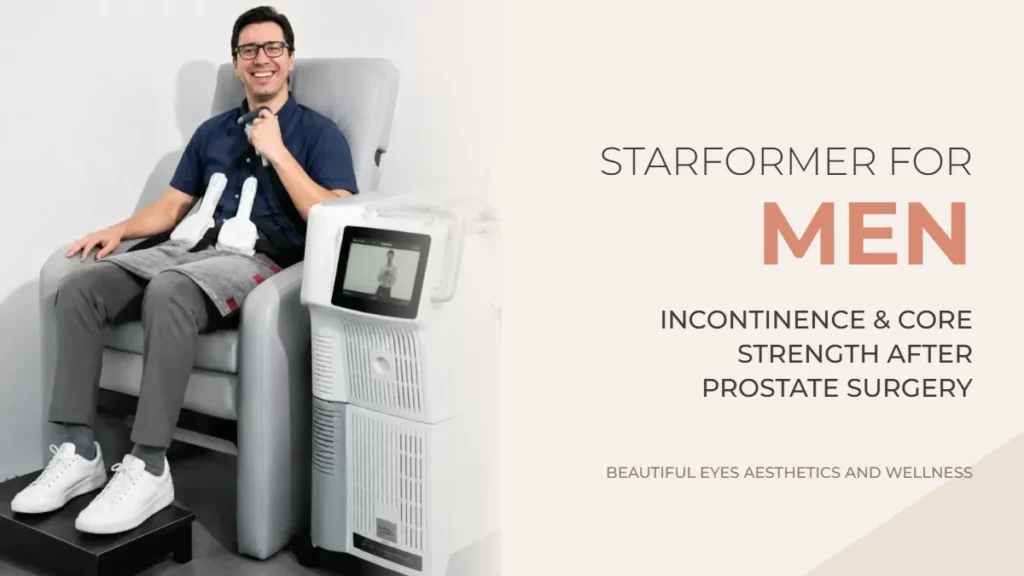
StarFormer uses Fotona’s HITS (High-Intensity Tesla Stimulation) technology. You sit fully clothed in a treatment chair with built-in applicators, and an additional applicator can be placed on your abdomen. The device triggers involuntary pelvic floor contractions (the same basic mechanism studied in the research above) without requiring you to correctly isolate the muscles yourself.
A typical session lasts around 20 to 30 minutes. Fotona’s typical IntimaWave course is 8 to 12 sessions over 6 to 8 weeks. Most men describe a pulsing sensation, not pain. There’s no downtime, and you can return to your normal activities right after.
Who Might Consider This
This may be worth discussing with your provider if you:
- Are recovering from prostate surgery and still experience urinary leakage
- Have been doing pelvic floor exercises but want additional support
- Want a non-invasive option to use alongside your at-home exercises
- Want to understand all the options available during your recovery, not just the standard ones
Certain health conditions may rule out this treatment, including a pacemaker or other implanted electronic device, metal implants near the treatment area, or a history of seizures.
Your provider will review your health history and coordinate with your surgical team to determine if this is a good fit for you.
Rebuilding Core Strength, Too
Recovery after surgery often means weeks of reduced activity, and core strength can fade along with pelvic floor control. StarFormer’s CoreRestore protocol targets the abdominal, lower back, and pelvic muscles together, and may be discussed alongside IntimaWave once your surgical team clears you for treatment.
A Note on Timing and Your Care Team
If you’re recovering from prostate surgery, your urologist or surgical team is your primary resource for guidance on timing and recovery. Any additional pelvic floor treatment should be discussed with them first and coordinated as part of your overall recovery plan, not treated as a separate, unrelated decision.
Moving Forward
Incontinence after prostate surgery is common, and it’s not something you have to just wait out in silence. Between standard pelvic floor exercises and options like magnetic stimulation that are still being studied, there’s more support available than many men realize.
If you’d like to talk through your recovery and what options might fit your situation, book a free consultation at Beautiful Eyes Aesthetics and Wellness in Greenfield, MA.
FAQs
How common is incontinence after prostate surgery?
It’s very common. In the ProtecT trial, prostatectomy had the greatest negative effect on urinary continence of any prostate cancer treatment, and leakage often improves gradually over the first year.
Do pelvic floor exercises actually work after prostate surgery?
Yes, for many men they help meaningfully. But results vary, and some men need additional support beyond exercises alone.
Is magnetic stimulation proven to fix incontinence after prostate surgery?
Research is promising but still developing. Some studies show real benefit, but current evidence isn’t yet considered strong enough for guidelines to formally recommend it as a first-line treatment. It’s worth discussing as one option among several with your provider.
Do I need to undress for a StarFormer session?
No. Sessions are performed fully clothed, using the StarFormer’s integrated treatment chair.
How soon after surgery can I start this kind of treatment?
This should be determined together with your surgical team, based on your individual recovery and surgical details.
Is this treatment covered by insurance?
Coverage varies by provider and insurance plan. It’s worth asking during your consultation.